
Economic Growth Strategy
2012~2020
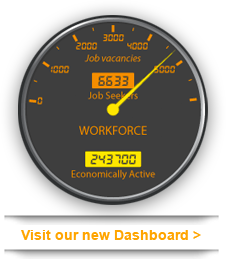


 Within Cornwall and the Isles of Scilly, we have already created partnerships and delivery mechanisms that can easily be adapted to fulfil the role required for our LEP.
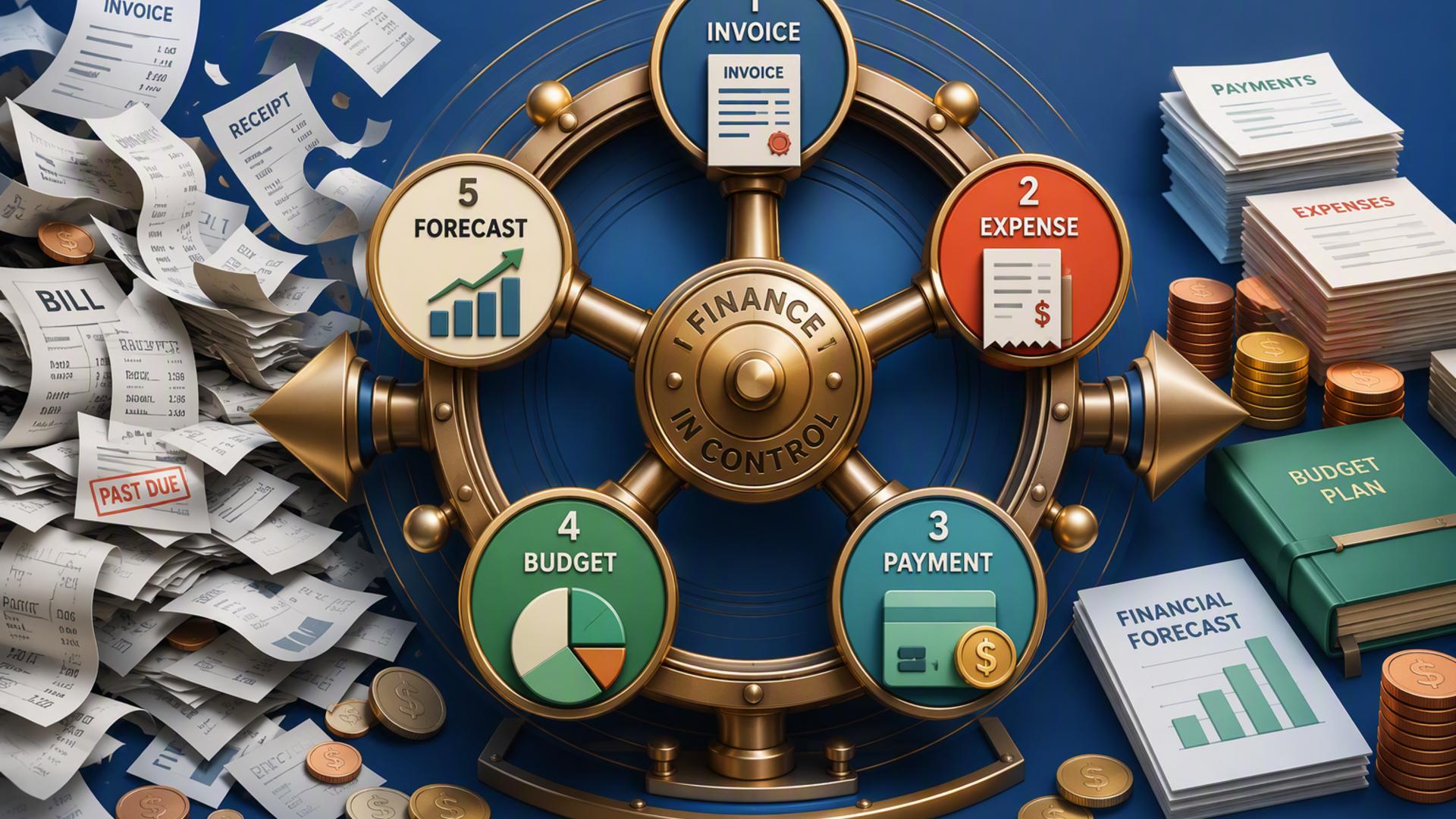
Five Finance Software Tools for US Small Businesses
For US small business owners, maintaining control of finances can appear simple until the day-to-day work begins. Tracking revenue, overseeing spending, meeting federal and state tax requirements, ensuring payroll accuracy, and assessing whether the company is growing as expected can make financial administration feel disproportionately demanding.
Small business owners who approach their finances with clarity and confidence are not always more knowledgeable about finance than those who find it difficult. More often, they have selected suitable software and established reliable routines for using it. The following five tools can have a meaningful impact.
1. Sage: Accounting Software
Sage serves as the central accounting system to which the other tools connect. It records income and expenses as they occur, automatically reconciles bank activity, supports invoicing and payment collection, and provides owners with an up-to-date view of their financial standing instead of requiring them to piece together the prior month's transactions.
For small businesses in the US, Sage covers the core accounting requirements: well-structured financial records, dependable reporting, and audit-ready books that make the tax season easier to manage. Its plans support varying business sizes and levels of complexity, from independent operators to expanding small companies with several employees, and can be upgraded as requirements change.
Why it matters: Reliable real-time records underpin sound business decisions. Even a profitable business lacks visibility without accurate financial information.
2. HubSpot CRM: Customer Relationship Management Platform
As a small business expands, it becomes increasingly important to understand the source of revenue, identify the clients that offer the greatest value, and determine which prospects are most likely to become customers. HubSpot CRM is a free-to-start platform that records customer interactions, organizes the sales pipeline, and gives owners visibility into the relationships generating revenue.
Connected with accounting software, CRM information can link sales activity to financial results. This makes revenue forecasting easier, helps identify the most profitable customer groups, and supports directing business development work toward opportunities most likely to produce a financial return.
Why it matters: Visibility into the customer relationships behind revenue enables small business owners to make better-informed choices about where to spend time and money to support growth.
3. Dext: Receipt and Expense Capture Software
Expenses that are not recorded can become lost opportunities at tax time. Dext is a receipt and expense capture tool that enables business owners to take a photo of a receipt on their phone, then automatically extracts the vendor, amount, date, and category before sending the details into accounting software.
For US small business owners frequently away from their desks, capturing an expense receipt within seconds is a practical improvement over holding onto paper receipts or attempting to recreate costs from bank statements during tax preparation. Dext integrates with Sage, keeping expense records current and complete without further data entry.
Why it matters: Each valid business expense that is captured and categorized correctly lowers taxable income. Recording expenses as they happen helps ensure that none are overlooked.
4. Gusto: Payroll and HR Platform
For businesses with employees, payroll is among the most demanding and legally sensitive US small business responsibilities. Federal withholding, FICA taxes, state income taxes, unemployment insurance, and related filings must all be calculated accurately and submitted by the required deadlines; mistakes or late submissions can result in penalties. Gusto is a payroll and HR platform built specifically for small businesses that automates these calculations and filings.
Gusto determines the appropriate federal and state withholding for every employee, automatically remits taxes, manages W-2s and 1099s, and gives employees a self-service portal for accessing pay stubs and tax documents. For owners without a dedicated payroll or HR professional, it reduces the complexity and risk associated with an obligation that must be handled correctly.
Why it matters: Incorrect payroll and missed tax filings can create meaningful legal and financial risk. A platform designed for US compliance can reliably automate that responsibility.
5. Stripe: Payment Processing Platform
Collecting payments promptly and with as little friction as possible is one of the clearest ways a small business can influence cash flow. Stripe is a payment processing platform through which businesses can accept credit and debit card payments online, in person, or through invoices, offering fast settlement and transparent pricing. Because it integrates with Sage, received payments can be entered and reconciled automatically without manual bookkeeping.
For US small businesses that invoice customers or offer products or services online, connecting a dependable, widely recognized payment processor to the accounting system supports both faster collections and more orderly financial records.
Why it matters: Quicker payment collection and automated reconciliation strengthen cash flow while removing the manual task of matching payments with invoices.
Frequently Asked Questions
How many hours can accounting software usually save a US small business owner?
Small business owners moving from manual bookkeeping to cloud accounting software commonly report saving three to eight hours each week. Automated bank reconciliation, invoice monitoring, and tax preparation account for much of that time savings. The benefit is often greatest during tax season, when organized digital records remove the need to rebuild an entire year's financial activity from the beginning.
Is a bookkeeper or accountant still necessary when I use accounting software?
Owners with uncomplicated finances can often manage their own records confidently using effective accounting software. If keeping books current is not something you want to handle personally, a bookkeeper can be useful, while an accountant is most valuable for complicated tax circumstances, business-structure choices, and year-end filings. When either professional is involved, organized digital records allow their time to focus on advice instead of data entry, which generally lowers fees.
Which taxes can accounting software help US small businesses handle?
Effective accounting software tracks revenue and expenses in the form required for federal and state income tax filings, calculates sales tax where relevant, and maintains records that support quarterly estimated tax payments. Certain platforms also connect with payroll software so employment taxes can be calculated and remitted appropriately. Although software does not substitute for a tax professional, it makes their work considerably easier and improves the reliability of your records.
Is cloud accounting software safe for confidential business financial information?
Established cloud accounting platforms protect financial data through bank-level encryption and automatic cloud backups. The security practices maintained by major cloud software providers are generally stronger than those a small business can maintain on a local computer. Automatic backups also mean that hardware failure, theft, or accidental deletion cannot cause data loss. Information is kept on servers that meet enterprise-grade security standards.
What factors should I consider when selecting accounting software for my US small business?
Key considerations include ease of use, the ability to link business bank accounts, compatibility with other tools such as payment processing and payroll software, and the standard of customer support. A platform may be powerful, but it will not provide its intended value if it is too difficult to use regularly. Selecting a system you can consistently keep updated is therefore just as important as reviewing its features.